
There’s no need for a high-powered speedboat to enjoy watersports, today’s pontoons and tritoons are more than capable of delivering an unforgettable day on the water. If you’re new to towing activities, this beginner’s guide will walk you through how to actually do each one, from your first pull to riding with confidence, whether you’re behind a 60–115hp pontoon or a 150–300hp tritoon on Douglas Lake.
Pontoon and tritoon boats are ideal for beginners thanks to their stability and space. A 60–115hp pontoon is great for a moderate thrill tubing and lighter riders, while a 150–300hp tritoon provides the torque needed for tubing, kneeboarding, skiing and wakeboarding.
Keep in mind: weight matters. The more people and gear you have onboard, the harder your engine has to work. Smaller motors will accelerate slower and may struggle to pull riders up, especially for kneeboarding, skiing and wakeboarding. If you’ve got a full crew, adjust expectations or consider more horsepower.
If you’re new to towing sports, tubing is the easiest and most approachable place to start. Riders simply hold on while the boat pulls them across the water, no standing or balancing required.
Behind a 60–115hp pontoon, tubing is a blast at moderate speeds with wide, gentle turns. A 150–300hp tritoon can add a bit more excitement with quicker acceleration and tighter turns for those who want a thrill. Start slow, communicate with the rider, and build up speed gradually. It’s all about fun and comfort.
Best for: All ages, beginners
Boat power: Any (for deciding the best boat for your day please check out our blog post “The best boat for me”)
How to do it:
Tips:
Kneeboarding is a great next step because it introduces balance and control without requiring you to stand up. Riders begin in a kneeling position and use a strap to stay secure on the board.
A mid-range pontoon can handle kneeboarding well, especially with a lighter rider and a moderate load on the boat. The deeper power of a tritoon makes getting up easier and allows for smoother rides. Focus on steady throttle and straight paths while the rider learns to balance and carve gently across the wake.
Best for: Beginners ready for more balance
Boat power: 75hp+ ideal, easier with more hp
How to do it:
Tips:
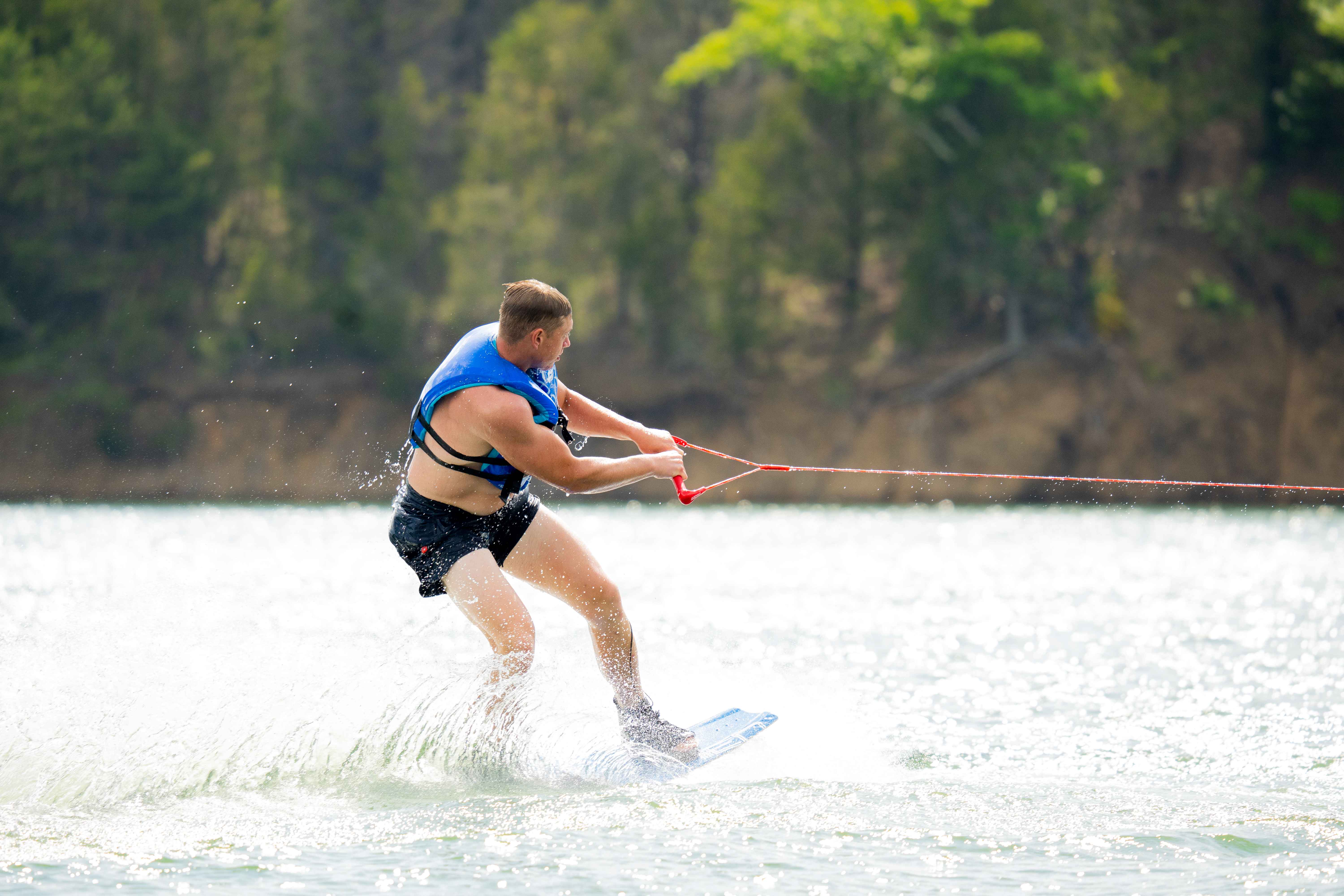
Wakeboarding adds more challenge, requiring riders to stand and balance while riding the wake. This is where horsepower and weight really start to matter.
A 150–300hp tritoon is your best bet for wakeboarding, offering the torque needed for a clean pull out of the water, even with several passengers on board. Beginners should start with slower speeds and practice getting up before attempting turns or small jumps. While a 60–115hp pontoon can occasionally manage a beginner rider with a light load, it’s not ideal for consistent kneeboarding, skiing, and wakeboarding performance.
Best for: Intermediate beginners
Boat power: 150hp+ recommended
How to do it:
Tips:
Water skiing is a timeless favorite, but it’s also one of the more demanding activities for both the rider and the boat. Deep-water starts require solid power and smooth acceleration.
For this reason, skiing is best suited to higher-horsepower tritoons in the 150–300hp range, especially when carrying multiple passengers. Beginners may find it easier to start with combo skis for added stability. Keep the pull steady, avoid jerky acceleration, and give the skier time to find their balance before increasing speed.
Best for: Determined beginners
Boat power: 150–300hp strongly recommended
How to do it:
Tips:
Safety Basics (Don’t Skip These)
Plan Your Day for Success
With 550 miles of shoreline, Douglas Lake has plenty of space to learn. Mornings offer calmer water, perfect for skiing and wakeboarding, while tubing can happen all day long.
Final Thoughts
You don’t need elite skills or massive horsepower to have an incredible time, you just need the right approach. Start with tubing, build confidence with kneeboarding, and work your way up to wakeboarding or skiing as your comfort grows.
Be mindful of your boat’s power, your passenger load, and your pace. Take your time, enjoy the process, and don’t be surprised if the biggest laughs come from the wipeouts.
That’s all part of the fun.